

Knox County Confronts the Amplified Islamic Call to Prayer
Sep 10, 2026 by FACT
Knox County Commissioner Andy Fox has proposed an ordinance that would prohibit the amplified Islamic call to prayer in public, carrying a $1,000 penalty for each violation.
The question this resolution poses is simple: What may be broadcast, by loudspeaker, into Tennessee homes without consent?
Defenders of amplified calls to prayer argue there is no meaningful difference between a loudspeaker and a church bell – but that comparison falls apart with any level of scrutiny.
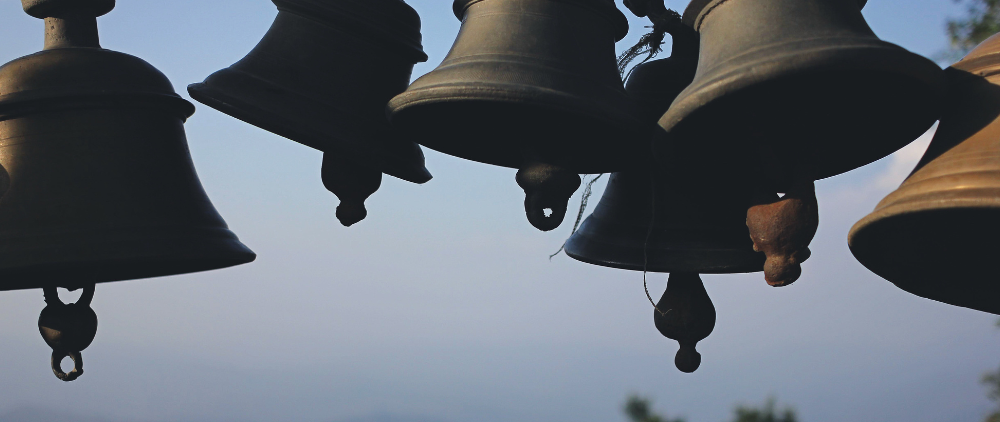
Church bells are a quintessential American symbol and still ring in many towns across Tennessee today, announcing the beginning of a service, marking the hour, tolling for a funeral or a wedding, in addition to several other purposes. After a generation in the same town, church bells often fade into the ordinary rhythm of life.
The adhan, however, is a spoken proclamation, one Commissioner Fox describes as "a proclamation about Islam claiming superiority over other religions," broadcast across entire neighborhoods five times a day. Here is the language of the adhan:
Fox contends that our current reading of the First Amendment, a rigidly neutral public square in which the government must treat every religious claim as interchangeable, is a modern invention rather than the founders' design. He sees ordinances like this one as the first step in a longer effort to restore the amendment's original meaning – the same incremental strategy that overturned Roe.
“Christians need to reclaim the First Amendment for its original intent, which recognized federal-only limitations on any one particular sect of Christianity as having favored status over other sects, the same way that Christians reclaimed the abortion issue; the way that gun-rights advocates have defeated gun control. Long term, this means adopting legislation at varying levels of government the way the State of Mississippi challenged Roe v. Wade’s spurious ruling,” Fox argued.
Justice Joseph Story, writing his Commentaries on the Constitution in 1833, argued that the Establishment Clause was meant to prevent a national church and competition between Christian denominations, not to compel government indifference toward religion itself.
Justice William Rehnquist wrote in his Wallace v. Jaffree dissent that the "wall of separation between church and State" is "a metaphor based on bad history, a metaphor which has proved useless as a guide to judging. It should be frankly and explicitly abandoned."
The old adage “prevention is the best cure” is eminently applicable in this case. While there are no mosques currently attempting to amplify the call to prayer in Knox County, we can read the writing on the wall – a cursory glimpse at what is happening in the UK shows us exactly what’s waiting on America’s doorstep if preventative measures aren’t taken.
FACT remains committed to defending the rights of Tennessee communities to govern their own public square. If this issue concerns you, consider contacting your county commission or supporting our work.
The question this resolution poses is simple: What may be broadcast, by loudspeaker, into Tennessee homes without consent?
Defenders of amplified calls to prayer argue there is no meaningful difference between a loudspeaker and a church bell – but that comparison falls apart with any level of scrutiny.
Church bells are a quintessential American symbol and still ring in many towns across Tennessee today, announcing the beginning of a service, marking the hour, tolling for a funeral or a wedding, in addition to several other purposes. After a generation in the same town, church bells often fade into the ordinary rhythm of life.
The adhan, however, is a spoken proclamation, one Commissioner Fox describes as "a proclamation about Islam claiming superiority over other religions," broadcast across entire neighborhoods five times a day. Here is the language of the adhan:
- Allahu Akbar (God is the greatest) – Recited four times
- Ashhadu an la ilaha illa Allah (I bear witness that there is no god but Allah) – Recited twice
- Ashhadu anna Muhammadan Rasool Allah (I bear witness that Muhammad is the messenger of Allah) – Recited twice
- Hayya 'ala-s-Salah (Hurry to the prayer) – Recited twice
- Hayya 'alal-Falah (Hurry to success) – Recited twice
- As-salatu khayrun min an-nawm (Prayer is better than sleep) – Recited twice during the early morning (Fajr) prayer
- Allahu Akbar (God is the greatest) – Recited twice
- La ilaha illa Allah (There is no god but Allah) – Recited once at the end
Fox contends that our current reading of the First Amendment, a rigidly neutral public square in which the government must treat every religious claim as interchangeable, is a modern invention rather than the founders' design. He sees ordinances like this one as the first step in a longer effort to restore the amendment's original meaning – the same incremental strategy that overturned Roe.
“Christians need to reclaim the First Amendment for its original intent, which recognized federal-only limitations on any one particular sect of Christianity as having favored status over other sects, the same way that Christians reclaimed the abortion issue; the way that gun-rights advocates have defeated gun control. Long term, this means adopting legislation at varying levels of government the way the State of Mississippi challenged Roe v. Wade’s spurious ruling,” Fox argued.
Justice Joseph Story, writing his Commentaries on the Constitution in 1833, argued that the Establishment Clause was meant to prevent a national church and competition between Christian denominations, not to compel government indifference toward religion itself.
Justice William Rehnquist wrote in his Wallace v. Jaffree dissent that the "wall of separation between church and State" is "a metaphor based on bad history, a metaphor which has proved useless as a guide to judging. It should be frankly and explicitly abandoned."
The old adage “prevention is the best cure” is eminently applicable in this case. While there are no mosques currently attempting to amplify the call to prayer in Knox County, we can read the writing on the wall – a cursory glimpse at what is happening in the UK shows us exactly what’s waiting on America’s doorstep if preventative measures aren’t taken.