

'We Gotta Ban These Dadgum Things' – Tennessee Congressman Takes Aim at the Surveillance State
Aug 6, 2026 by FACT
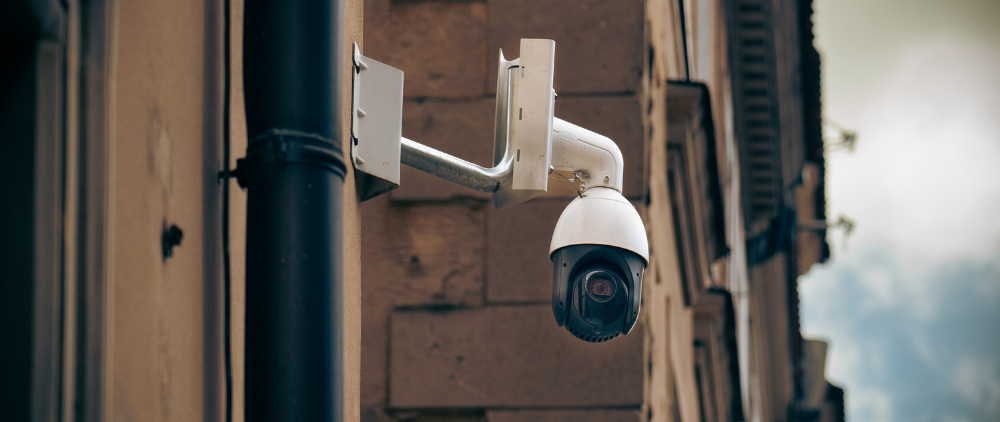
Automated cameras now scan more than 20 billion license plates every single month across the United States, logging the make, model, color, and even the bumper stickers on nearly every car that passes. Tennessee Congressman Tim Burchett put it simply: "We gotta ban these dadgum things."
Legislative Action
On July 21, 2026, Rep. Burchett introduced H.R. 9800, the Protection Against Mass Surveillance Act. The bill “would bar federal agencies from buying, operating, or accessing automated license plate readers, explicitly naming Flock Safety cameras, along with facial recognition and biometric tools that identify people by fingerprint, iris, voice, or gait,” a Washington Examiner op-ed explains. “Any data a federal agency does obtain has to be deleted within 30 days, and none of it can be used in court. State and local governments couldn’t spend federal dollars on the same systems.”
Rep. Thomas Massie filed a companion effort, nicknamed “Don't Flock Me,” that would strip federal funding from any city or police department that installs the cameras at all. On July 15, Rep. Keith Self introduced a third bill, the PRIVACY Act, which would require federal agencies to obtain a warrant before querying data already collected by state and local systems.
Where Tennessee Stands
Flock now operates roughly 120,000 cameras with more than 5,000 law enforcement agencies nationwide, and hundreds have already been installed around Tennessee. Knox County commissioners abruptly pulled a proposed 200-camera rollout off the agenda after public pushback, and lawmakers are now weighing state-level regulations on license plate readers.
“I appreciate Congressman Burchett’s efforts to bring this attention at the national level,” Knox County Mayor Glenn Jacobs stated. “As technology advances, we need to make sure the rules and regulations surrounding these devices keeps up and continues to protect the rights and liberties of our citizens.”
Only six states – California, Colorado, Washington, Utah, Kentucky, and Maine – have enacted any comprehensive statute governing how ALPR technology may be used. Every other state, Tennessee included, allows individual police departments to regulate their use.
Surveillance State
Flock is no longer just an ALPR company. It has become, in its own words, a "big data" platform. Flock's search tool, called Freeform, lets officers search the entire camera network using natural-language descriptions of people, not just vehicles. Typing something like "man in blue shirt and cowboy hat" pulls up matching footage nationwide. Flock insists Freeform isn’t facial recognition software, but the practical effect is the same: locating a specific individual from a physical description.
A Flock device formerly called Raven, now marketed simply as “Audio Detection,” listens for gunshots and other "critical sounds" the company defines as community disruption. In October 2025, Flock piloted a "Distress Detection" feature that scanned the microphones for human voices, with early advertising specifically flagging "screaming" as a trigger, which the company quickly swapped for "distress" after backlash. Only after nine months of sustained public pressure did Flock announce, on July 17, 2026, that it would "remove the feature" altogether. There’s little reason to take this reversal as anything more than damage control, given that the hardware itself has not changed. The microphones are still deployed, still listening, and nothing in federal law prevents Flock from reintroducing voice-distress detection, or a rebranded version of it, in the future.
Flock also operates a "Drone as First Responder" program that auto-launches a drone to the coordinates of any alert – a 911 call, a plate hit, an Audio Detection trigger – before an officer ever arrives.
The most concerning facet of Flock’s network is Nova, the company's flagship investigative platform. Nova merges ALPR hits with jail records, arrest records, 911 dispatch data, and open-source public-records searches into a single "Google-like" interface. Nova transforms Flock from a set of isolated devices into surveillance-state infrastructure, building a nationwide tracking network by stitching together data about American citizens – where they go, what they drive, and who they are – into a single, searchable file.
To make matters worse, the devices are no longer confined to public roads. Flock units now sit in the parking lots of Home Depot, Lowe's, Target, and Walmart locations across the country, feeding plate data into police-accessible databases. The company markets directly to schools, homeowners' associations, prisons, and places of worship. All told, Flock is now valued at $7.5 billion, with approximately 140,000 active law enforcement users across more than 6,000 communities in 49 states.
The Constitutional Issue
In Carpenter v. United States (2018), the US Supreme Court held that police need a warrant to pull months of a suspect's cell-site location data, because "the whole of a person's physical movements" carries a reasonable expectation of privacy. This June, in Chatrie v. United States, the Court decided 6-3 that "an individual has a legitimate expectation of privacy in the information Location History collects about his cell phone’s—meaning his own—movements. The police invade that expectation, and thus conduct a search, when they acquire that information, even though for only a limited period of time and even though via a third-party tech company.”
The Court rejected the argument that a narrow slice of a massive database somehow doesn't count as a search, writing in Chatrie: “Where the Fourth Amendment applies, it applies regardless of ‘the quality or quantity of information’ the government obtains.”
Police departments’ indiscriminate use of Flock’s database to spy on citizens without warrants is a clear and dangerous violation of the Fourth Amendment. It’s as simple as that.
Abusing the System
A Washington Post investigation recently documented at least fifty cases nationwide in which law enforcement officers have been charged with or accused of misusing ALPR systems to surveil intimate partners, ex-partners, or women they wanted to pursue. In twenty-six of those cases, investigators concluded the officer was specifically spying on a wife, girlfriend, ex, or her new partner.
Marci Bakely, a Georgia mother, discovered through the public tracking site Have I Been Flocked that her ex-boyfriend – the police chief of nearby Braselton – had queried her plate and her teenage daughter's roughly six hundred times over a year. She sought a restraining order; a judge denied it for insufficient evidence. He was eventually arrested on stalking and misuse charges. Before trial, he was found dead at his home in an apparent suicide.
“The fundamental problem with these systems is that they place private information about people’s movements over time in the hands of every officer,” Institute for Justice attorney Michael Soyfer explained. “Without the constitutional safeguard of a warrant requirement, that predictably allows officers to abuse their access to these systems for things like stalking romantic partners.”
A searchable log of every vehicle's movements doesn't just track suspects; it tracks people pulling into church parking lots, families visiting a crisis pregnancy center, homeschool co-ops meeting weekly, and law-abiding citizens exercising their Second Amendment rights at a local range or gun store. This isn’t hypothetical. In Ithaca, New York, a camera network installed under a state gun-violence program now does exactly that. The Electronic Frontier Foundation (EFF) has already documented hundreds of Flock searches run against protesters and activist groups.
Flock has only been mainstream for ~6 years, and it’s already getting out of hand. It’s time to enact safeguards before it goes any further.
Anti-Flock Action
As of June 2026, 53 municipalities across 20 states have canceled or rejected Flock contracts, 38 of them in just the last six months. Amazon's Ring dropped its Flock partnership in February. Knox County's proposed 200-camera expansion remains paused. If you want to know whether your own plate has been searched, Have I Been Flocked aggregates publicly released department audit logs and lets you check for free.
Flock insists "public safety, privacy, and Fourth Amendment rights can and must coexist" and points to its audit logs, search-reason requirements, and an optional tool that flags suspicious query patterns.
But those are Flock's guardrails, set by Flock, audited by Flock's customers, and enforced at Flock's discretion – and that is precisely the danger.
We have handed a $7.5 billion corporation the closest thing to a national tracking infrastructure this country has ever had, and we are relying entirely on that corporation's goodwill to police itself. Every police department, retailer, school, and homeowners' association that signs a Flock contract is quietly outsourcing a decision the Constitution reserves for judges: who gets watched, and why.
The Fourth Amendment requires a warrant precisely because power, once concentrated and unaccountable, tends to be used badly, eventually, by somebody. A surveillance network with no warrant requirement and no oversight is not a public safety tool with some rough edges. It is exactly the kind of unaccountable power our Constitution was written to prevent.
FACT remains committed to defending the constitutional liberties that protect Tennessee families – from the sanctity of life to the privacy of the home to the freedom to worship, gather, and raise our children without being constantly surveilled. Please consider supporting our work here.
Legislative Action
On July 21, 2026, Rep. Burchett introduced H.R. 9800, the Protection Against Mass Surveillance Act. The bill “would bar federal agencies from buying, operating, or accessing automated license plate readers, explicitly naming Flock Safety cameras, along with facial recognition and biometric tools that identify people by fingerprint, iris, voice, or gait,” a Washington Examiner op-ed explains. “Any data a federal agency does obtain has to be deleted within 30 days, and none of it can be used in court. State and local governments couldn’t spend federal dollars on the same systems.”
Rep. Thomas Massie filed a companion effort, nicknamed “Don't Flock Me,” that would strip federal funding from any city or police department that installs the cameras at all. On July 15, Rep. Keith Self introduced a third bill, the PRIVACY Act, which would require federal agencies to obtain a warrant before querying data already collected by state and local systems.
Where Tennessee Stands
Flock now operates roughly 120,000 cameras with more than 5,000 law enforcement agencies nationwide, and hundreds have already been installed around Tennessee. Knox County commissioners abruptly pulled a proposed 200-camera rollout off the agenda after public pushback, and lawmakers are now weighing state-level regulations on license plate readers.
“I appreciate Congressman Burchett’s efforts to bring this attention at the national level,” Knox County Mayor Glenn Jacobs stated. “As technology advances, we need to make sure the rules and regulations surrounding these devices keeps up and continues to protect the rights and liberties of our citizens.”
Only six states – California, Colorado, Washington, Utah, Kentucky, and Maine – have enacted any comprehensive statute governing how ALPR technology may be used. Every other state, Tennessee included, allows individual police departments to regulate their use.
Surveillance State
Flock is no longer just an ALPR company. It has become, in its own words, a "big data" platform. Flock's search tool, called Freeform, lets officers search the entire camera network using natural-language descriptions of people, not just vehicles. Typing something like "man in blue shirt and cowboy hat" pulls up matching footage nationwide. Flock insists Freeform isn’t facial recognition software, but the practical effect is the same: locating a specific individual from a physical description.
A Flock device formerly called Raven, now marketed simply as “Audio Detection,” listens for gunshots and other "critical sounds" the company defines as community disruption. In October 2025, Flock piloted a "Distress Detection" feature that scanned the microphones for human voices, with early advertising specifically flagging "screaming" as a trigger, which the company quickly swapped for "distress" after backlash. Only after nine months of sustained public pressure did Flock announce, on July 17, 2026, that it would "remove the feature" altogether. There’s little reason to take this reversal as anything more than damage control, given that the hardware itself has not changed. The microphones are still deployed, still listening, and nothing in federal law prevents Flock from reintroducing voice-distress detection, or a rebranded version of it, in the future.
Flock also operates a "Drone as First Responder" program that auto-launches a drone to the coordinates of any alert – a 911 call, a plate hit, an Audio Detection trigger – before an officer ever arrives.
The most concerning facet of Flock’s network is Nova, the company's flagship investigative platform. Nova merges ALPR hits with jail records, arrest records, 911 dispatch data, and open-source public-records searches into a single "Google-like" interface. Nova transforms Flock from a set of isolated devices into surveillance-state infrastructure, building a nationwide tracking network by stitching together data about American citizens – where they go, what they drive, and who they are – into a single, searchable file.
To make matters worse, the devices are no longer confined to public roads. Flock units now sit in the parking lots of Home Depot, Lowe's, Target, and Walmart locations across the country, feeding plate data into police-accessible databases. The company markets directly to schools, homeowners' associations, prisons, and places of worship. All told, Flock is now valued at $7.5 billion, with approximately 140,000 active law enforcement users across more than 6,000 communities in 49 states.
The Constitutional Issue
"Those who would give up essential Liberty, to purchase a little temporary Safety, deserve neither Liberty nor Safety." – Benjamin Franklin
In Carpenter v. United States (2018), the US Supreme Court held that police need a warrant to pull months of a suspect's cell-site location data, because "the whole of a person's physical movements" carries a reasonable expectation of privacy. This June, in Chatrie v. United States, the Court decided 6-3 that "an individual has a legitimate expectation of privacy in the information Location History collects about his cell phone’s—meaning his own—movements. The police invade that expectation, and thus conduct a search, when they acquire that information, even though for only a limited period of time and even though via a third-party tech company.”
The Court rejected the argument that a narrow slice of a massive database somehow doesn't count as a search, writing in Chatrie: “Where the Fourth Amendment applies, it applies regardless of ‘the quality or quantity of information’ the government obtains.”
Police departments’ indiscriminate use of Flock’s database to spy on citizens without warrants is a clear and dangerous violation of the Fourth Amendment. It’s as simple as that.
Abusing the System
A Washington Post investigation recently documented at least fifty cases nationwide in which law enforcement officers have been charged with or accused of misusing ALPR systems to surveil intimate partners, ex-partners, or women they wanted to pursue. In twenty-six of those cases, investigators concluded the officer was specifically spying on a wife, girlfriend, ex, or her new partner.
Marci Bakely, a Georgia mother, discovered through the public tracking site Have I Been Flocked that her ex-boyfriend – the police chief of nearby Braselton – had queried her plate and her teenage daughter's roughly six hundred times over a year. She sought a restraining order; a judge denied it for insufficient evidence. He was eventually arrested on stalking and misuse charges. Before trial, he was found dead at his home in an apparent suicide.
“The fundamental problem with these systems is that they place private information about people’s movements over time in the hands of every officer,” Institute for Justice attorney Michael Soyfer explained. “Without the constitutional safeguard of a warrant requirement, that predictably allows officers to abuse their access to these systems for things like stalking romantic partners.”
A searchable log of every vehicle's movements doesn't just track suspects; it tracks people pulling into church parking lots, families visiting a crisis pregnancy center, homeschool co-ops meeting weekly, and law-abiding citizens exercising their Second Amendment rights at a local range or gun store. This isn’t hypothetical. In Ithaca, New York, a camera network installed under a state gun-violence program now does exactly that. The Electronic Frontier Foundation (EFF) has already documented hundreds of Flock searches run against protesters and activist groups.
Flock has only been mainstream for ~6 years, and it’s already getting out of hand. It’s time to enact safeguards before it goes any further.
Anti-Flock Action
As of June 2026, 53 municipalities across 20 states have canceled or rejected Flock contracts, 38 of them in just the last six months. Amazon's Ring dropped its Flock partnership in February. Knox County's proposed 200-camera expansion remains paused. If you want to know whether your own plate has been searched, Have I Been Flocked aggregates publicly released department audit logs and lets you check for free.
Flock insists "public safety, privacy, and Fourth Amendment rights can and must coexist" and points to its audit logs, search-reason requirements, and an optional tool that flags suspicious query patterns.
But those are Flock's guardrails, set by Flock, audited by Flock's customers, and enforced at Flock's discretion – and that is precisely the danger.
We have handed a $7.5 billion corporation the closest thing to a national tracking infrastructure this country has ever had, and we are relying entirely on that corporation's goodwill to police itself. Every police department, retailer, school, and homeowners' association that signs a Flock contract is quietly outsourcing a decision the Constitution reserves for judges: who gets watched, and why.
The Fourth Amendment requires a warrant precisely because power, once concentrated and unaccountable, tends to be used badly, eventually, by somebody. A surveillance network with no warrant requirement and no oversight is not a public safety tool with some rough edges. It is exactly the kind of unaccountable power our Constitution was written to prevent.